The Ancient Sphagnum Realm
Deep within Ķemeri National Park lies one of the largest and oldest moss bogs in the Baltic states. Lielais Ķemeru Tīrelis began forming roughly 8,000 years ago as the ancient Littorina Sea retreated, leaving shallow depressions carpeted by sphagnum mosses that never fully decayed. The peat moss layer here reaches depths of up to eight meters, acting as a colossal natural sponge and carbon storehouse.
The Magic of the Dawn Microclimate
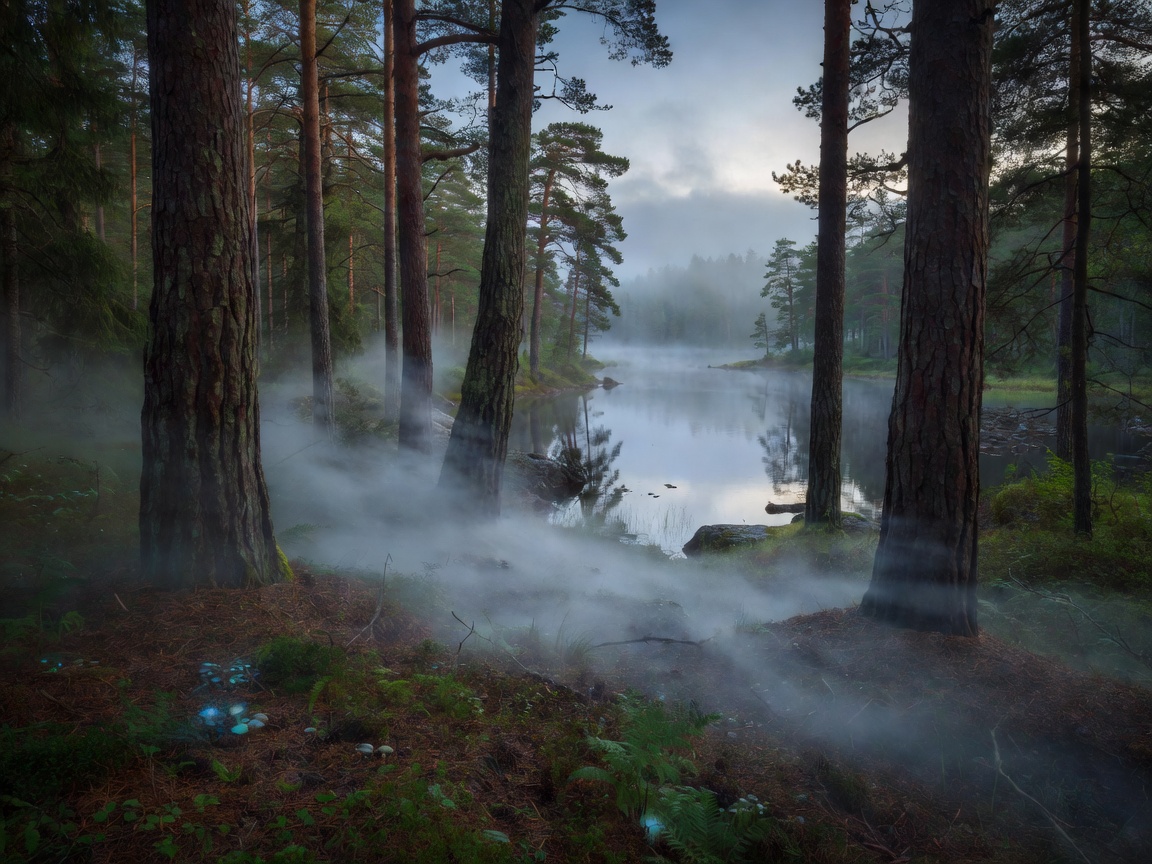
While casual day-trippers encounter the bog under flat midday lighting, true enthusiasts arrive before astronomical twilight. Because peat absorbs solar heat during the day and rapidly radiates it during nocturnal hours, the moisture in the saturated moss condenses into thick ground-level fog banks. As the northern sun crests the horizon, it bathes the dwarfed Scots pines (Pinus sylvestris f. turfosa) in deep terracotta and amber beams.
Unique Flora and Medicinal Hydrology
The bog sustains specialized carnivorous plants such as the Round-leaved Sundew (Drosera rotundifolia), which ensnares insects on glistening glandular hairs to supplement nitrogen. Beneath the peat layers, geochemical reactions between gypsum-rich dolomite and anaerobic sulphate-reducing bacteria produce the world-famous natural sulphur hydrogen sulphide mineral water springs that gave birth to the historic Ķemeri spa town in 1838.
Ethical Expedition Guide
- Leave No Trace: Sphagnum moss cushions take decades to regenerate after a single human footprint breaches the protective crust. Stay exclusively on the pine boardwalk.
- Footwear: Waterproof trekking boots with thermal wool socks are advised, as morning dew on the wooden planks is heavy and slippery.
- Bird Watching: Home to nesting Wood Sandpipers, Golden Plovers, and migrating European Cranes during late September.