The Ancient River of Fate (Koiva)
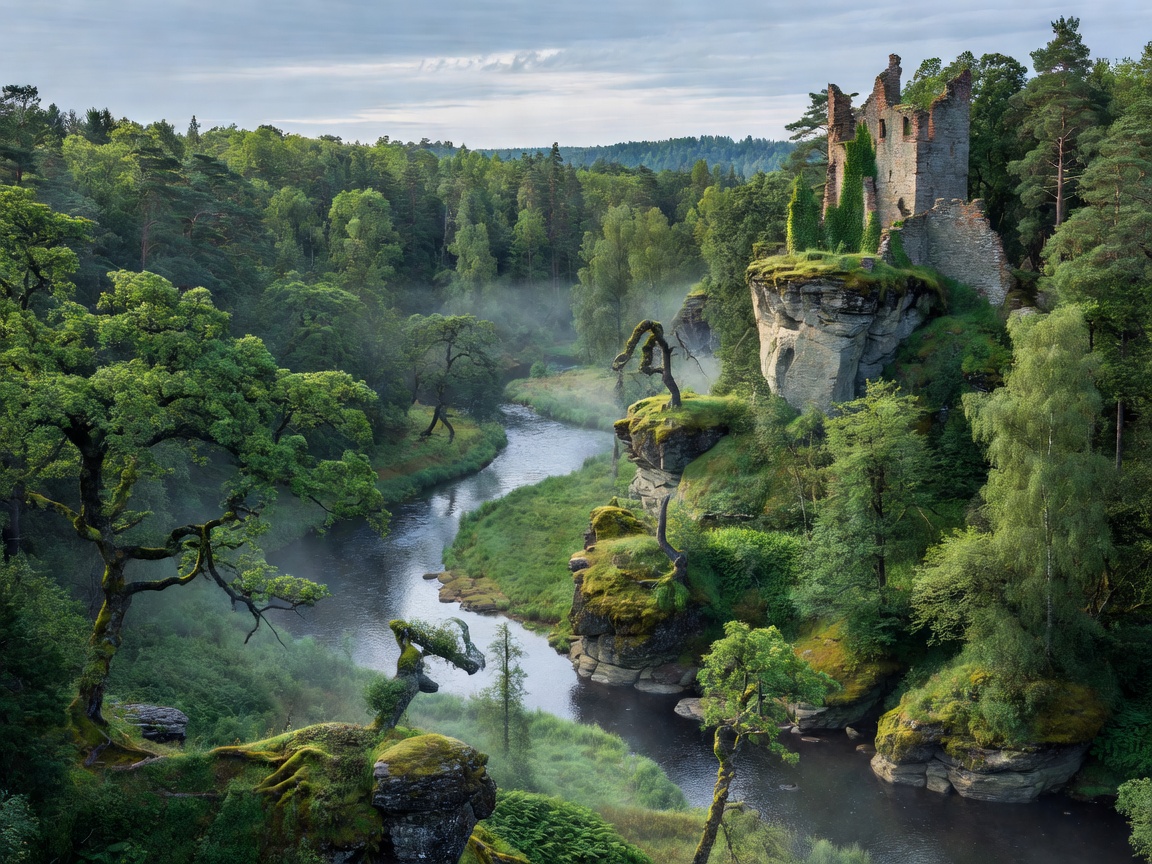
Before the arrival of German merchant crusaders and the sword-wielding Order of the Brothers of the Sword (Schwertbrüderorden) in the early thirteenth century, the Gauja River—known to the indigenous Livonians as the *Koiva*—was a vital spiritual and commercial artery. Carving a ravine up to 85 meters deep through ancient Devonian red sandstone formations, the river valley presented an impregnable geographic fortress.
The Triangular Rivalry: Bishop vs. Knights
Medieval Vidzeme was defined by an intricate balance of military power. The Archbishop of Riga held the commanding northern promontory at Turaida (Fredeland - "Land of Peace"), while the Livonian Order erected the fortified Sigulda Castle (Segewold) on the southern bluff across the roaring waters. For centuries, these two colossal stone complexes stared across the forested gorge in tense standoff, punctuated by sieges and territorial treaties.
Gūtmanis Cave: Centuries of Inscribed Devotion
Just below the castle heights lies Gūtmaņala (Gūtmanis Cave), the largest internal volume cave in the Baltic states. Formed by an underground freshwater spring eroding the soft yellow-red sandstone, the cave walls bear heraldic coats of arms, Latin inscriptions, and romantic initials carved by travelers dating back to 1601. It remains the centerpiece of the tragic 1620 folk legend of the Rose of Turaida (Maija Roze).
Curator’s Walking Itinerary
- The Krimulda Manor Ravine: Descend the historic wooden switchback stairs through primeval beech-fern hollows to the river crossing.
- Vikmeste Valley Path: Follow the gentle Vikmeste brook where forgotten Liv wooden hill forts (*pilskalni*) lie enveloped in thick moss.
- Turaida Tower Platform: Climb the 38-meter brick donjon during late afternoon when the sun sets parallel to the river bend.